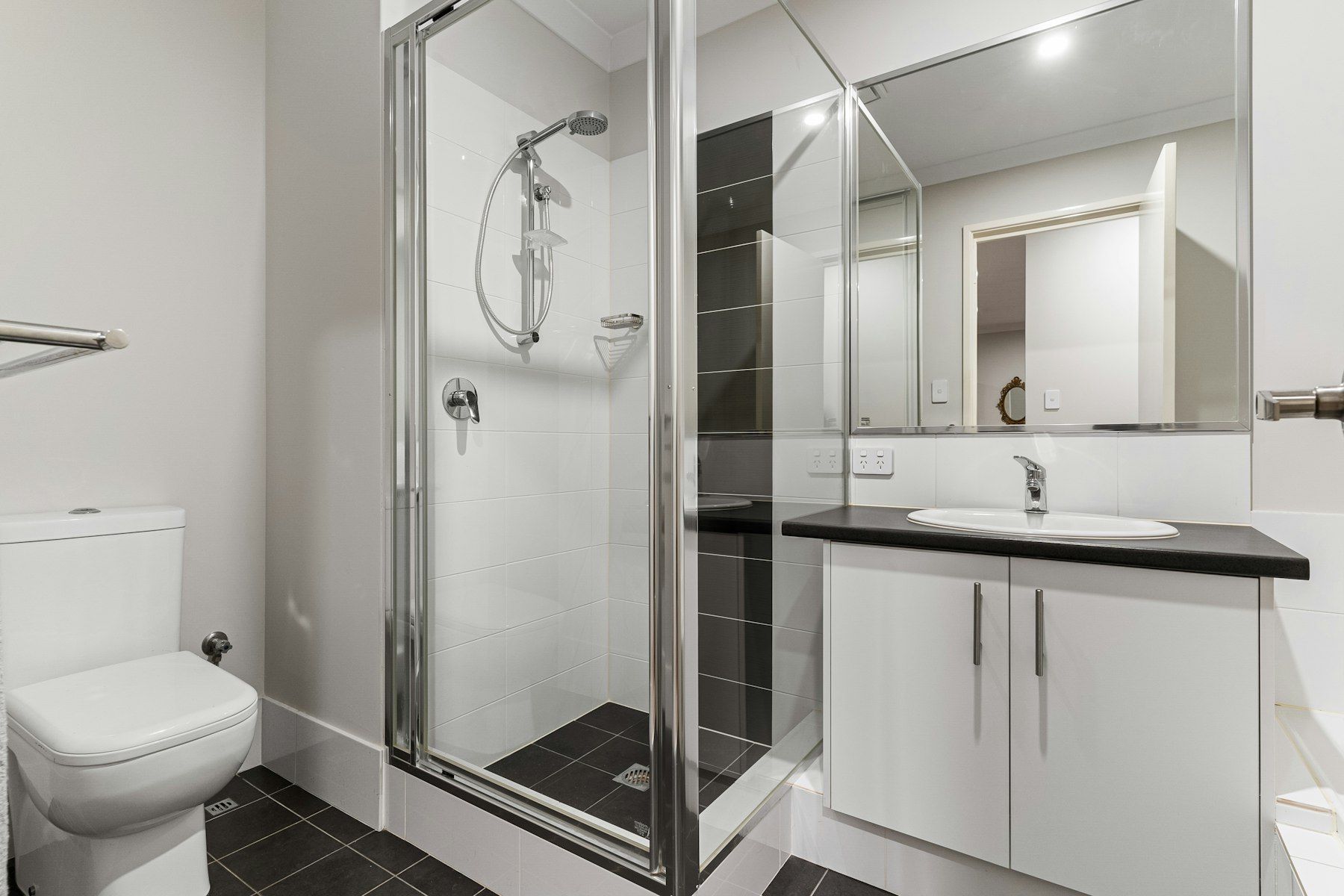
Glass that completes the bathroom
A shower screen is one of the largest single elements in a bathroom, and it shapes how the whole room looks and feels. A dated framed screen with cloudy glass and corroded tracks can make even a well-tiled bathroom feel old. A crisp, frameless panel of clear glass, on the other hand, opens the room up, shows off the tiling and gives the space a calm, contemporary feel.
We supply and install shower screens throughout Beaconsfield and surrounding suburbs as part of our renovations and as a stand-alone upgrade. Every screen is measured on site from the finished tiles, so it fits precisely, and installed with appropriate fixings and seals so it performs as well as it looks.
Types of shower screens
Frameless screens
Frameless screens use thick toughened glass panels held by minimal hardware such as hinges, clamps or channels. They create the cleanest look and are easy to clean because there are no frames to trap grime. They suit most contemporary bathrooms and are our most common installation.
Semi-frameless screens
Semi-frameless screens have a frame around the fixed panels but not the door, combining a lighter look with a lower glass thickness. They are a good choice where framing helps support the glass or where the budget is focused elsewhere in the room.
Fixed walk-in panels
A single fixed panel with an open entry creates a walk-in shower. It is elegant, simple and very easy to clean, but it relies on the shower being long enough and the floor falls and waste being well designed to contain water.
Pivot and hinged doors
Hinged doors open outward and suit enclosed showers. Doors must have clearance from vanities, toilets and towel rails. Pivot doors can offer a more flexible opening arrangement in some layouts.
Sliding screens
Sliding frameless screens are useful where there is not enough space for a door to swing. Modern systems use quality rollers on a top rail for smooth operation.
Bath screens
A fixed or hinged bath screen replaces a shower curtain over a bath, improving both appearance and water containment.
Glass options
Toughened safety glass
All shower screens must use safety glass appropriate to the application, and we install toughened glass of a thickness suited to the panel size and configuration.
Low-iron glass
Standard glass has a slight green tint, visible on thicker panels and edges. Low-iron glass is noticeably clearer, keeping your tile colours true. It is an upgrade we often recommend in premium bathrooms.
Protective coatings
Glass coatings reduce the adhesion of water, soap and minerals, making cleaning easier and helping glass stay clearer for longer.
Obscure and patterned glass
Frosted, fluted or reeded glass adds privacy and texture. Fluted glass has become a popular design choice that adds character while softening views into the shower.
Tinted glass
Grey or bronze tinted glass can suit bold, contemporary bathrooms and complements darker tapware finishes.
Hardware finishes
Hinges, clamps, handles and channels are available in chrome, brushed nickel, matt black, brushed brass and other finishes. Matching your hardware to your tapware creates a cohesive look. Quality hardware resists corrosion in the humid bathroom environment and maintains smooth operation over time.
Measuring and installation
Measured from finished surfaces
Shower screens are custom made. Tiles, walls and floors are never perfectly straight, and measurements must be taken after tiling is complete. We measure carefully, accounting for wall plumb, floor falls and the position of tapware and niches.
Fixings
Fixings are installed into solid backing where possible, with care taken not to penetrate the waterproofing membrane unnecessarily. Where fixings must pass through tiles and the membrane, the penetrations are sealed appropriately. During our renovations, we install blocking in the walls at screen fixing locations at the framing stage.
Seals and silicone
Door seals, drip strips and wipers help contain water. Silicone joints are applied where glass meets tile or a shower base, using a sealant suitable for glass.
Checking operation
After installation, we check doors swing or slide freely, close correctly and seal effectively, and that the screen is plumb and secure.
Designing the shower around the screen
The best screen design starts with the shower layout. Shower length, entry width, waste position and floor falls all influence how much water reaches the glass and the entry. In a walk-in shower, a fixed panel needs to be long enough to protect the bathroom floor from spray. In a compact shower, a hinged door and return panel may be more practical. We consider these together during design.
Replacing an existing screen
Replacing a dated screen is a fast way to update a bathroom. When replacing a screen, we look at:
- The condition of the shower walls and floor where the old screen was fixed, as removal may reveal holes, staining or damaged tiles.
- Whether an old hob or base will remain, which affects the new screen’s design.
- Whether the shower has failed silicone or grout that should be addressed at the same time.
If the shower base or waterproofing is failing, we will advise you before installing a new screen over a problem.
Caring for your shower screen
- Squeegee after each shower to remove water before it dries and leaves spots.
- Clean weekly with a soft cloth and a mild, non-abrasive cleaner.
- Avoid abrasive pads and harsh chemicals, which can damage coatings and hardware finishes.
- Check hinges and seals periodically, and replace worn seals to maintain water containment.
- Ventilate to reduce condensation and mineral build-up.
Shower screens in local homes
Older homes in Beaconsfield, Berwick and Narre Warren often have framed aluminium screens on tiled hobs. Replacing these with frameless screens is one of the most popular upgrades we carry out, often combined with removing the hob for a step-free shower. In hills homes around Upper Beaconsfield and Emerald with tank water, a protective glass coating can help reduce mineral build-up.
Book a shower screen consultation
Whether you are renovating or simply want to replace a tired screen, book a consultation. We will measure accurately, help you select the right glass and hardware and install a screen that looks and performs beautifully.
Choosing between frameless and semi-frameless
Both styles can look excellent when well installed. The right choice depends on the shower’s shape, how the glass will be supported and the look you want.
Frameless glass relies on thicker panels and robust hardware fixed to solid backing. It is ideal where walls have been prepared with blocking and where you want the most open, minimal look. Because there are no channels or frames along the glass edges, cleaning is quick and there are fewer places for mould to grow.
Semi-frameless screens use slimmer framed fixed panels, which can be helpful when walls are slightly out of plumb or when blocking is not available in the right places. The framed sections can also add a subtle graphic line that suits some traditional and industrial designs.
During the consultation, we look at your walls, tiles and shower layout and recommend the system that will be secure, watertight and attractive in your bathroom.
Water containment explained
Clients often ask whether a frameless screen will leak. A well-designed frameless shower contains water through a combination of factors rather than seals alone: the shower floor falls correctly towards the waste, the waste is positioned where most water lands, the screen is long or high enough to block spray, the door has appropriate seals and wipers, and the shower head is positioned so water is directed away from openings. When these work together, a frameless shower performs very well. When one is wrong, no seal will fully compensate. That is why we treat the screen as part of the shower design, not an add-on.
Safety considerations
Toughened safety glass is designed to break into small, blunt fragments rather than sharp shards if it is ever broken, reducing injury risk. Glass panels should be handled and installed by experienced installers, fixed into solid structure and checked for correct clearances, because glass in contact with tile or metal can be damaged over time. We also recommend door handles that are comfortable to grip with wet hands and towel rails positioned so they do not interfere with doors.
Planning ahead
Before measuring, we check that walls are plumb and the floor falls correctly, because glass is unforgiving of out-of-square surfaces. Where the shower base or tiles need attention, we address that first so the new screen seals properly and looks right for years.
Combining a new screen with other updates
A new screen pairs naturally with resealing, tile and grout restoration and tapware upgrades. Completing these together can transform an existing shower without a full renovation, provided the waterproofing beneath is sound.
Areas we service
- Bathroom Renovations Beaconsfield
- Bathroom Renovations Berwick
- Bathroom Renovations Cardinia
- Bathroom Renovations Clyde North
- Bathroom Renovations Cockatoo
- Bathroom Renovations Emerald
- Bathroom Renovations Gembrook
- Bathroom Renovations Guys Hill
- Bathroom Renovations Harkaway
- Bathroom Renovations Narre Warren North
- Bathroom Renovations Narre Warren
- Bathroom Renovations Officer
- Bathroom Renovations Pakenham
- Bathroom Renovations Upper Beaconsfield
Book a design consultation
Tell us about your bathroom, ensuite or laundry and we will arrange a visit to assess the space and talk through the possibilities.
Book a design consultation